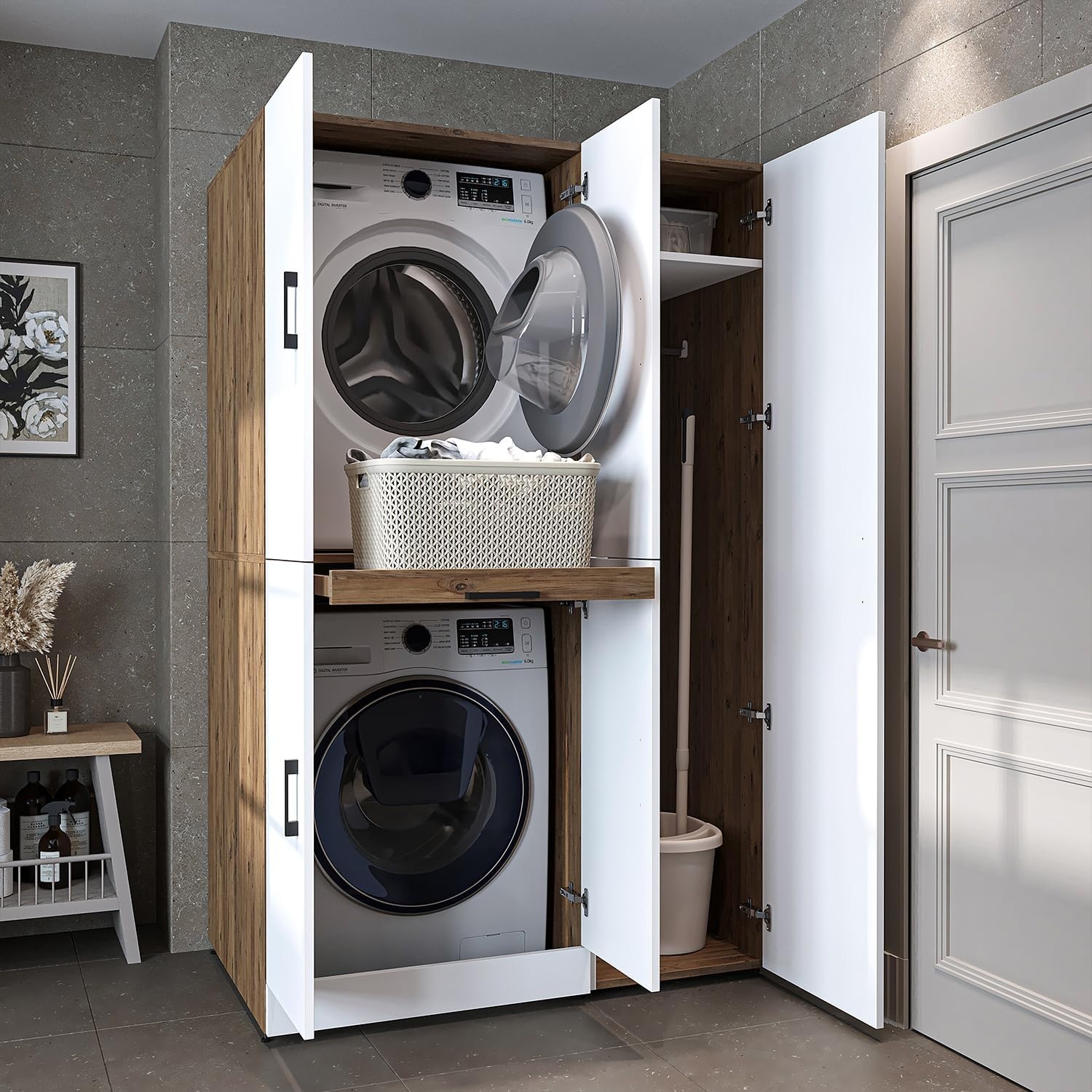
The Ultimate Guide to Washing Machines and Dryers
The washing machine and dryer are the pillars of our domestic life, but we often use them with a bit of guesswork. Using them correctly doesn't just mean avoiding "miniature-sized" clothes; it also means making fabrics last longer and keeping your appliances healthy.
Here is everything you need to know for a mistake-proof laundry routine.
PART 1: The Washing Machine (Maintenance and Care)
1. Watch the Temperature and Spin Speed Heat is the primary enemy of natural fabrics.
- The 40°C Threshold: Beyond this temperature, cotton and wool risk irreversible shrinkage. A small exception: Pastelli professional scrubs are designed to withstand 60°C or even 90°C to guarantee hygiene.
- Spin Stress: If the spin cycle is too fast, it "over-wrings" the fibers, damaging them. For precious garments—and for easier ironing—keep it below 800 RPM.
2. The Correct Load: The "Arm Rule" Overfilling the drum prevents detergent from dissolving properly, leaving white streaks on clothes.
- Expert Tip: The load is perfect if you can easily fit your arm between the clothes and the top of the drum.
3. Maintenance: Drum and Heating Element
- Visual Inspection: Check that the plastic lifters (paddles) are intact. If chipped, they can tear fabrics. Also, check for underwires or coins stuck in the drum holes.
- The Heating Element: Limescale and soap residue build up here. If you notice "mysterious" stains on clean clothes, it’s time to act.
- Golden Advice: Run an empty wash cycle at 90°C once a month to sanitize the entire system and eliminate residue.
4. Detergent: "Less is More" More foam doesn't mean cleaner clothes. Stick to the recommended doses and choose products that aren't too aggressive. An extra rinse is always a good idea to protect your skin from chemical residue.
5. Gasket: Goodbye Mold After every wash, wipe away the water in the folds of the rubber gasket with a cloth and leave the door slightly ajar. If the rubber is stained or cracked, it must be cleaned or replaced immediately to prevent leaks.
PART 2: The Dryer (How to Avoid Shrinkage)
Drying well is a science that combines temperature, rotation, time, and humidity.
Why do clothes shrink? Shrinkage occurs when fibers, stretched out by the wash water, contract abruptly due to excessive heat or over-drying (total absence of moisture).
Which program to choose?
- Delicates (45-55°C): Ideal for t-shirts, shirts, and Pastelli garments. Gentle rotation to minimize wrinkles.
- Synthetics: Constant airflow at a medium temperature, perfect for sportswear.
- Cotton "Cupboard Dry": The best program for daily use. It leaves a hint of moisture that protects the fibers.
- Cotton "Extra Dry": Reserve this only for towels and heavy jeans. Forbidden for t-shirts!
The Secret of Residual Moisture Modern dryer sensors leave an invisible veil of moisture that acts as a flexible "shield" for the fibers.
- Pro Tip: Do not mix heavy items (jeans) with light items (t-shirts). The dryer will keep heating until the jeans are dry, ending up "cooking" the t-shirts unnecessarily.
FAQ: Quick Questions
- What is the safest dryer program? The Delicates cycle.
- What should never go in the dryer? Uncertified wool, light viscose, items with rubberized prints, or handmade knitwear.
- How do I read the label? Look for a circle inside a square. One dot = low temperature. An X = air dry only (do not tumble dry).
In conclusion: Treat your appliances with care and they will reward you by making your clothes last twice as long. Moderate washes and "smart" drying are the keys to a wardrobe that always looks new!
Also, read the instructions for the proper maintenance of our scrubs.
Informative obligations for public grants: the State aid and de minimis aid received by our company are listed in the National Register of State Aid referred to in Article 52 of Law 234/2012, which can be accessed at the following link: https://www.rna.gov.it/trasparenza/aiuti